First steps at the piano, heard with care.
Your child plays their own piano, acoustic or digital. Boo listens through the microphone and answers note by note, in sessions of 3 to 7 minutes.
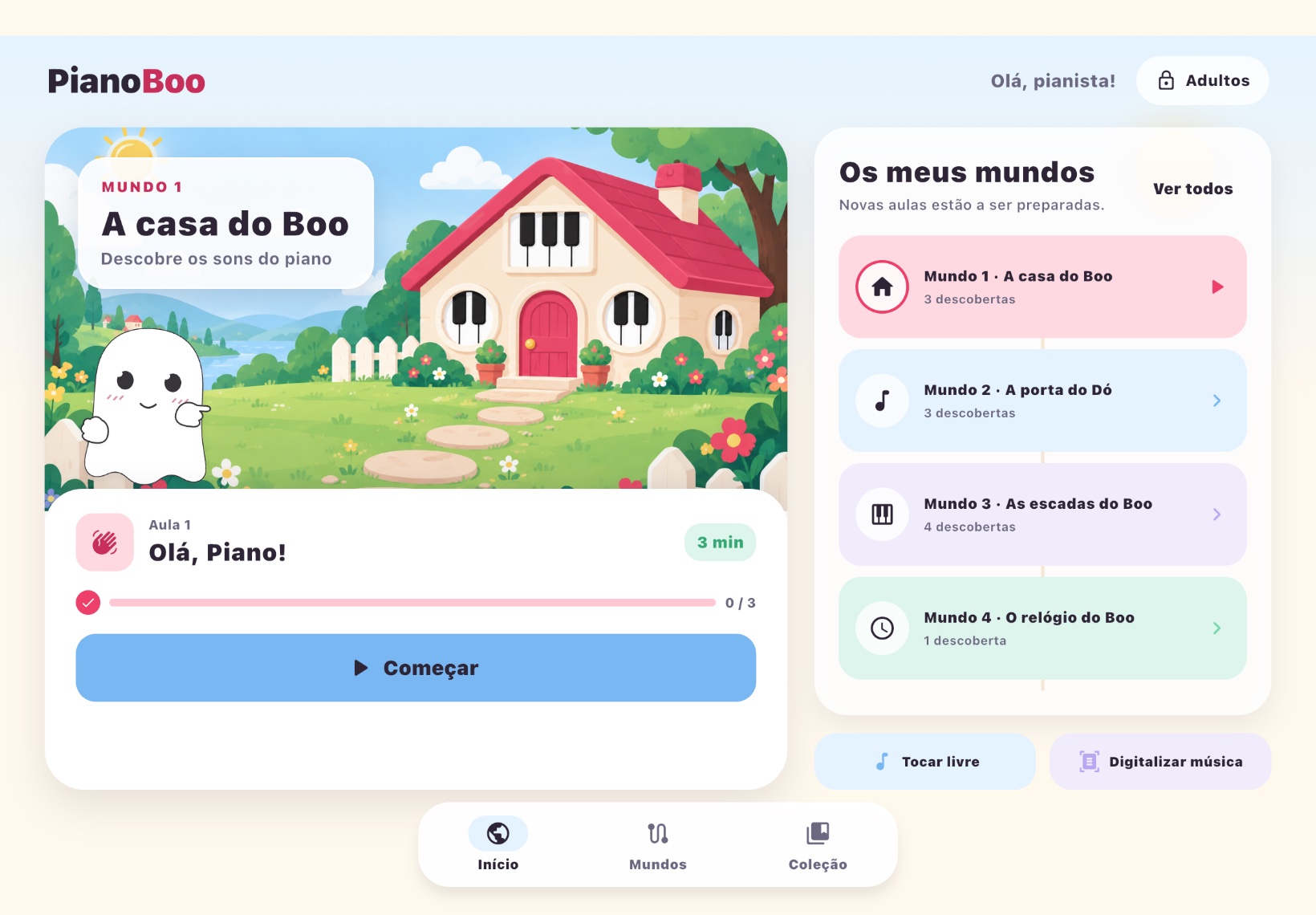

It all starts at Boo's house.
Low and high sounds, white and black keys, finger numbers.
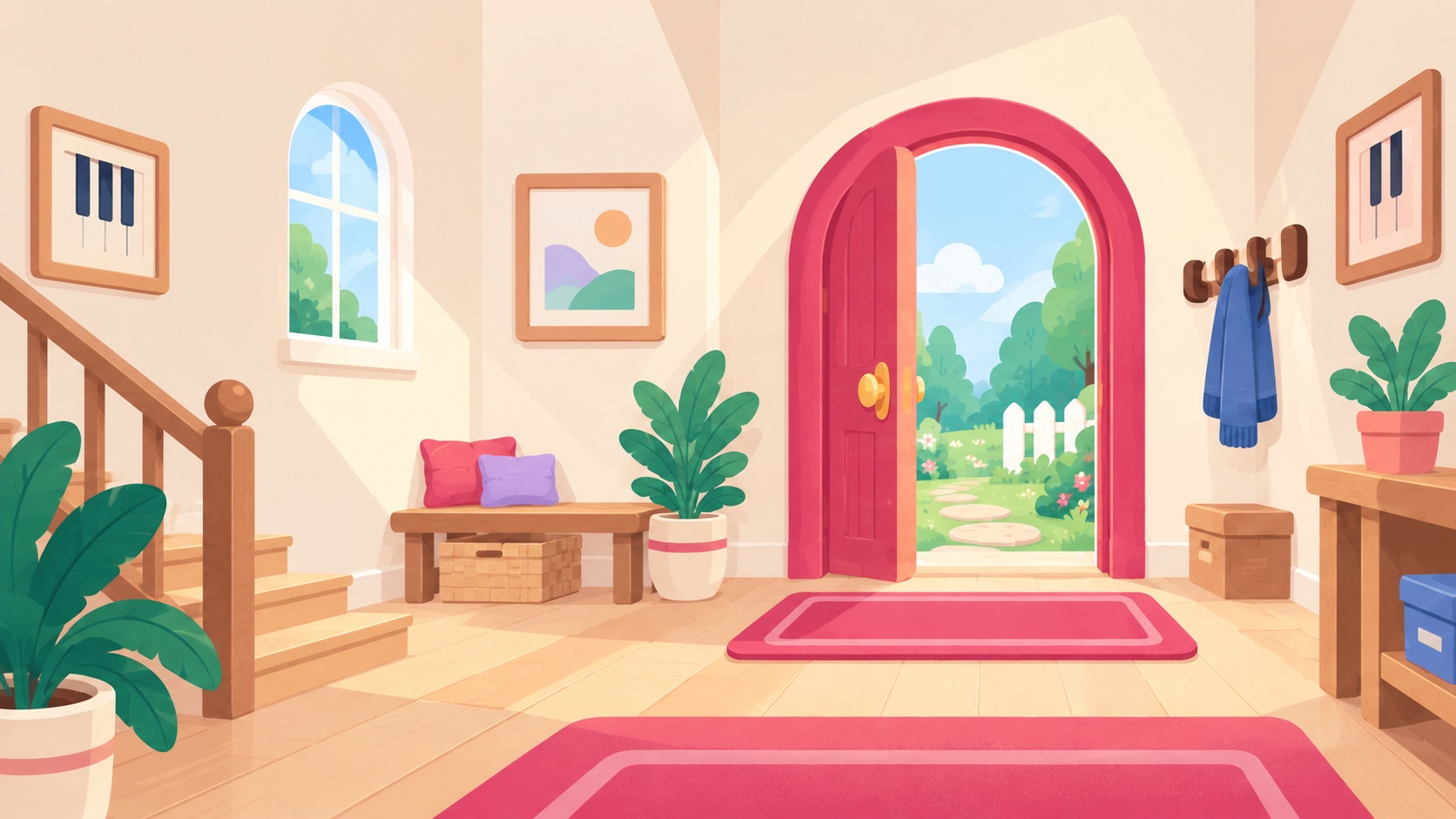
Every C is a door.
Two black keys together are the roof of a little house, and C is its door. Then, the same C on the staff.
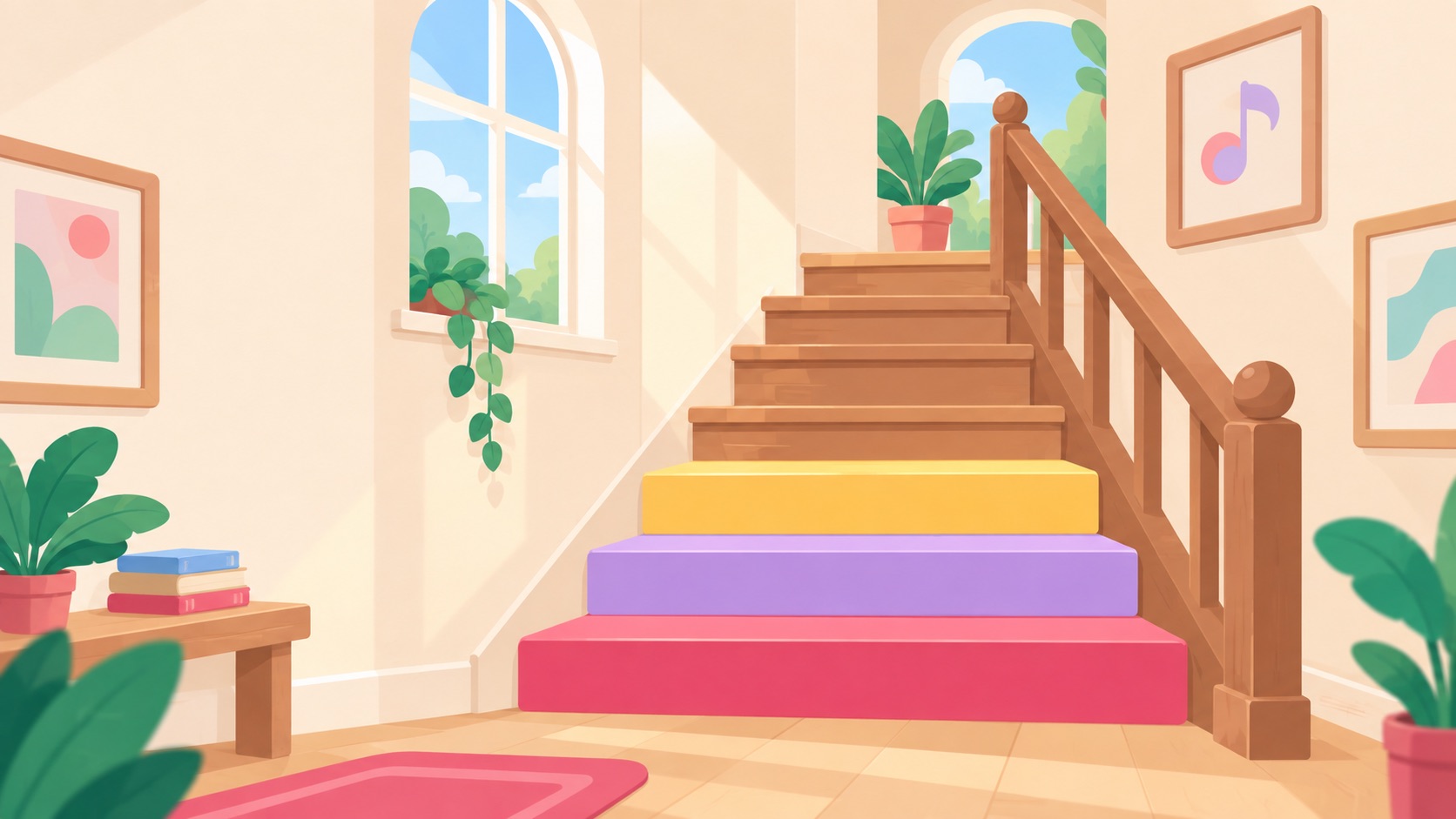
Every note is a step.
D is one step above C, and B one step below. On the staff and on the piano.
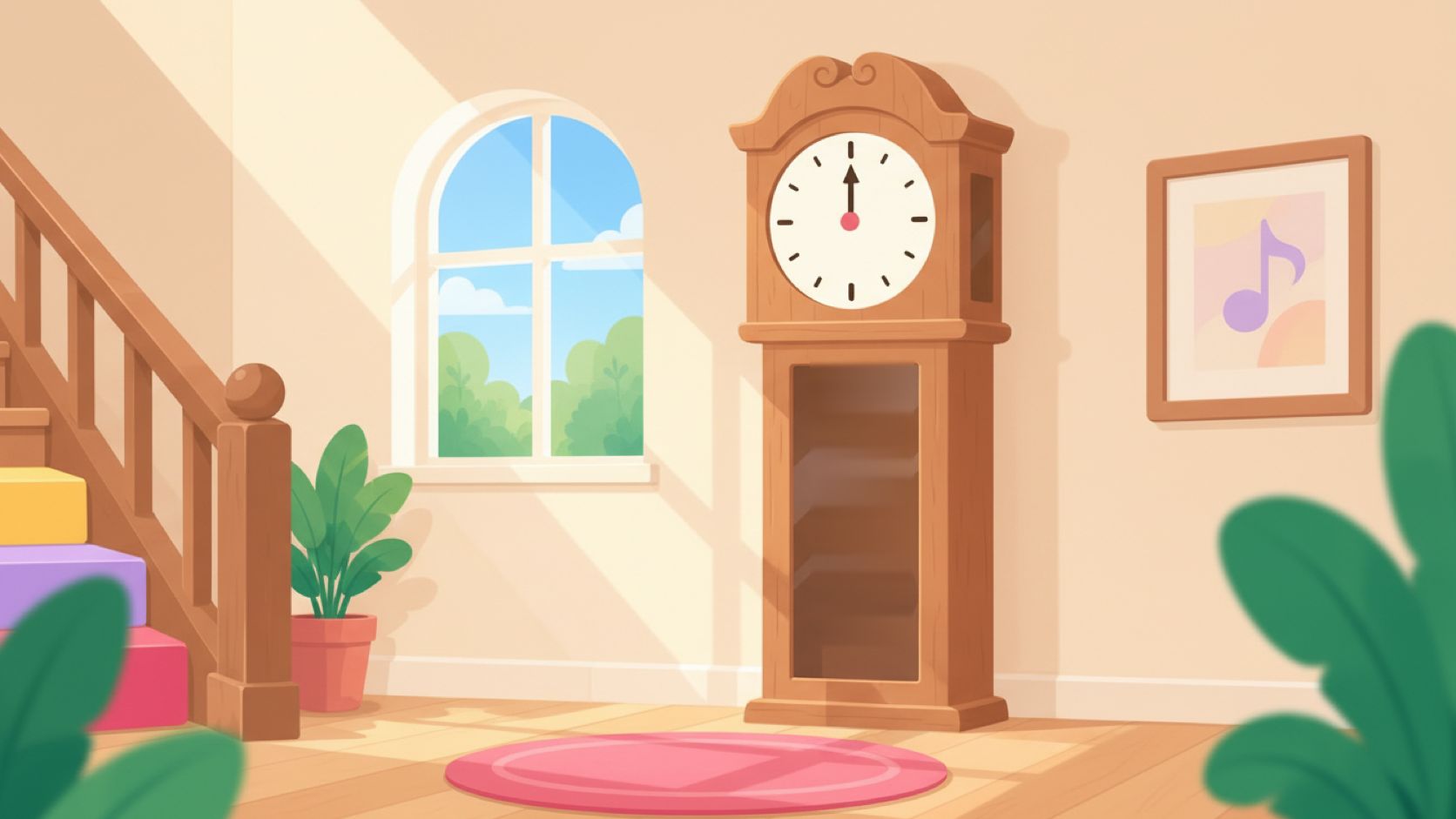
Some notes are short, others last longer.
To the tick-tock of the clock, your child discovers quarter notes and half notes.
The next doors.
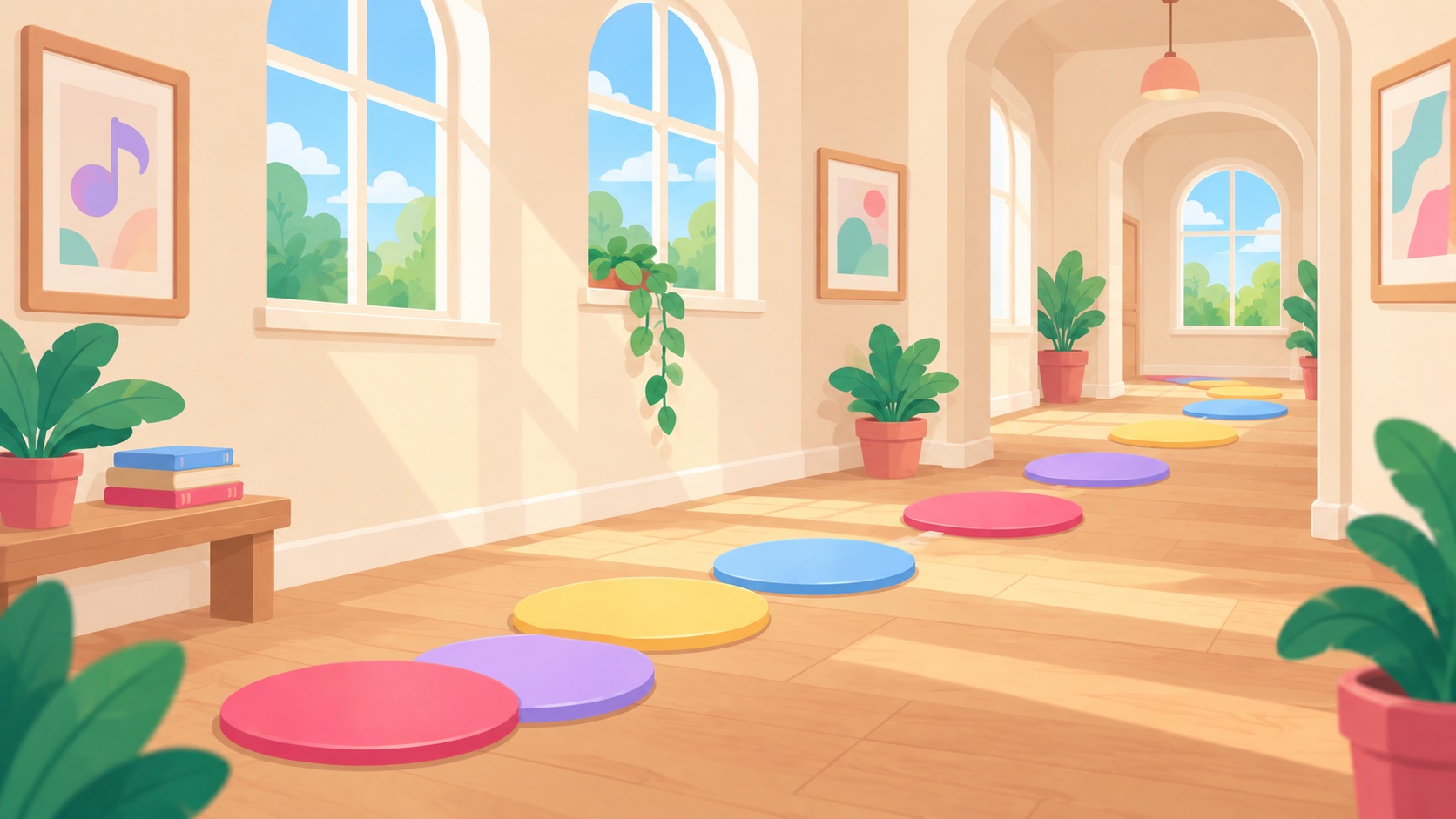
The corridor of steps and leaps
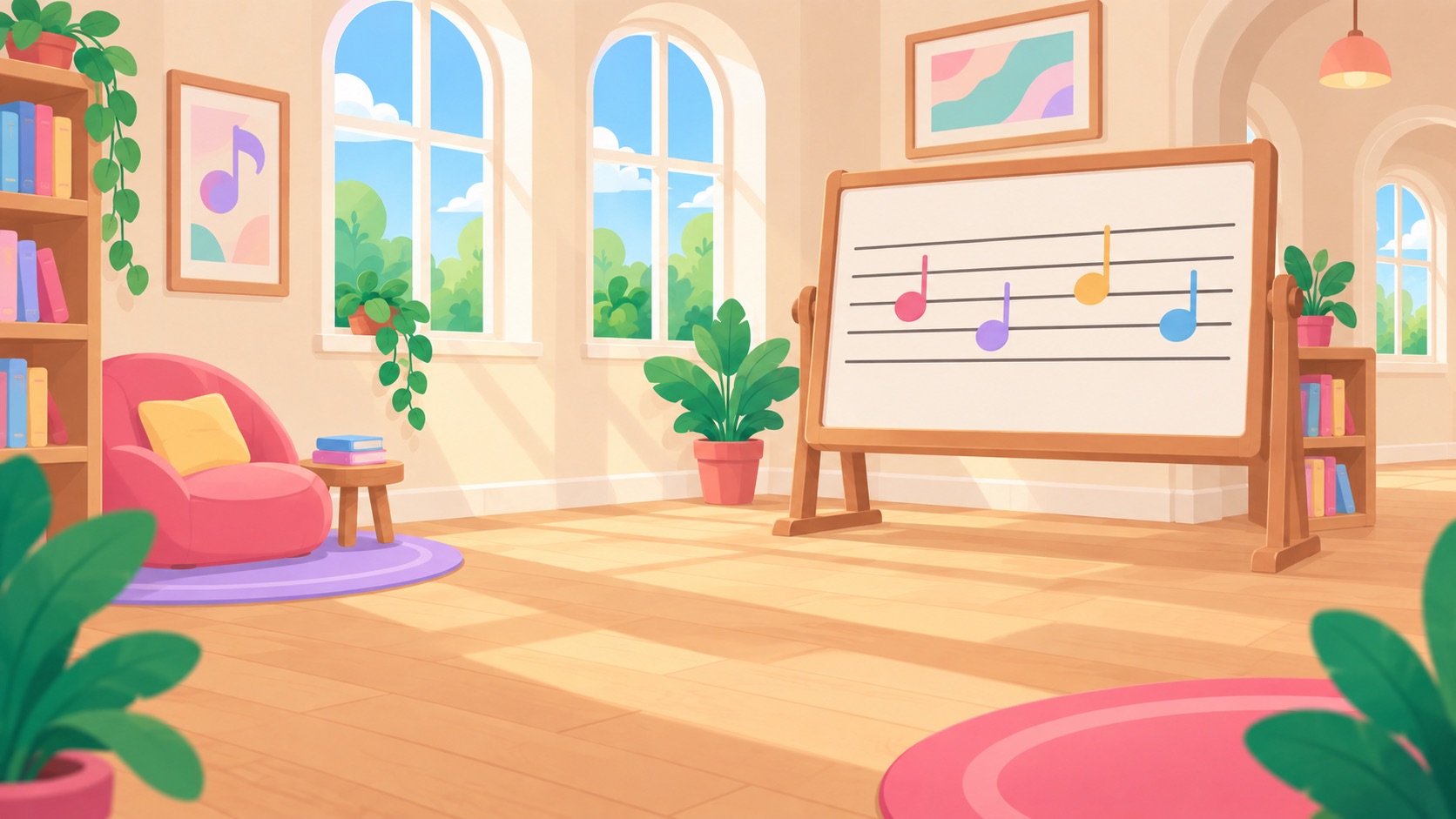
The staff room
How it works
It hears the piano, not the room.
Only the sound of a piano key counts: the strike of the hammer, a note that holds steady and the tuning of your piano, which PianoBoo learns from the first notes. Someone talking or singing nearby is never mistaken for a note.
“Look for two black keys together. They're the roof of a little house.”Boo, in the lesson “Where is C?” (translated)
A friend who explains out loud.
Boo speaks to your child in European Portuguese, with short sentences and subtitles. It shows on the keyboard where to look and, as your child gains confidence, the hints fade away.
Made to work alongside the teacher.
The teaching plan was built by a piano teacher.
The note, the octave, whether it goes up or down, the order of the notes and when each key is played to the tick-tock.
Everything the microphone can't hear: technique and posture, hands and fingers, the body's rhythm, the quality of the sound, expression, interpretation and each child's own path.
Teachers freely choose the sessions along the path and use PianoBoo as support during the lesson.
Tell me when it's outFrequently asked questions
Do I need a digital piano or cables?
No. It works with acoustic or digital pianos. PianoBoo listens through the tablet's microphone: no MIDI and no cables needed.
Who is it for?
For children who are starting the piano. The path is the same for everyone; the language, the hints and the number of answers adapt.
Does it replace the teacher?
No. PianoBoo only assesses what it can confirm through the microphone: the note, the octave, the direction, the order and the timing of each key. Posture, hands, fingers and expression stay with the teacher.
What if the house is noisy?
Only the sound of a piano key counts. If Boo can't hear well, it asks to try again, and that never counts as a mistake.
What happens to my child's data?
There is no account for the child and progress is stored on the device. Sound is processed on the tablet itself and is never recorded. There are no ads in the child's experience.
How much does it cost?
[Price and model to be decided.]
Be among the first to try it.
For iOS and Android. Leave your email and we'll let you know when PianoBoo is available.